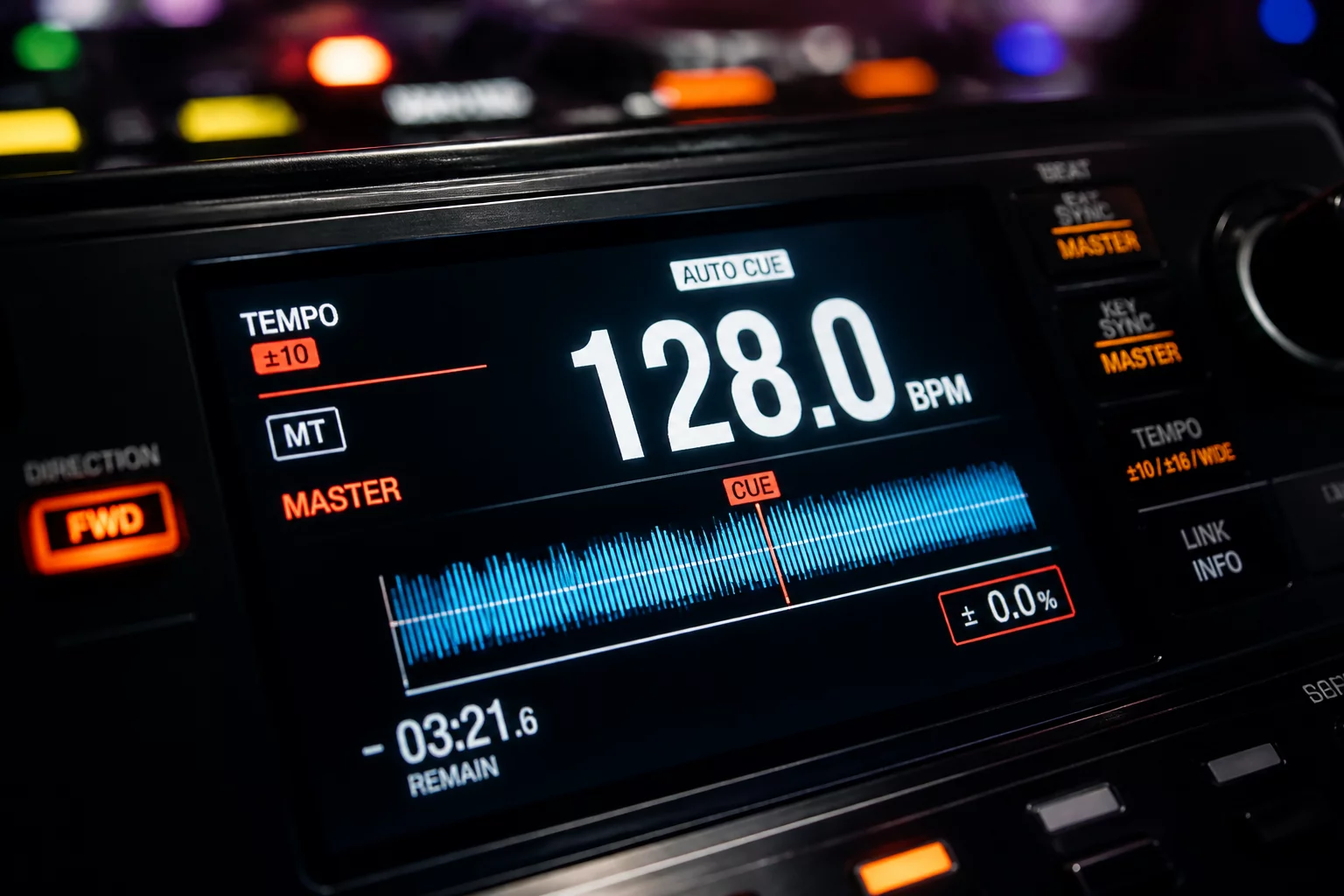
The Premature Acceleration Trigger
The original blueprint for the opening hour plotted a steady progression across slow-burning deep dub house hovering between 116 and 118 BPM. The plan assumed a sparse floor until well past midnight, allowing subtle rhythmic textures to percolate. However, the venue filled forty minutes earlier than expected due to an adjacent showcase ending prematurely. By track four, the kinetic pressure at the edge of the booth was incompatible with a sluggish 117 BPM groove.
Staying locked into the scheduled warm-up would have created friction against the incoming crowd's momentum. Instead of executing the planned four-track plateau, the decision was made to compress twenty minutes of gradual tempo inflation into a single bold transition at the twenty-eighth minute mark.
Rigid tempo adherence is the fastest way to lose a room that arrives hungry. When the floor demands momentum early, you abandon the slow climb and establish the groove right then.
Anatomy of the Two-Track Pivot
Reaching 126 BPM from 118 without jarring the dancefloor required careful track pairing rather than aggressive fader nudging. A sudden jump on an open kick drum shatters continuity, whereas percussion-heavy elements mask pitch modulation:
- Track 05 swapped out a planned minimal ambient builder for a syncopated percussion workout featuring dense polyrhythmic shakers and muted bass.
- The tempo of Track 05 was imperceptibly crept up by 2.5% across its 96-bar looped intro, elevating the foundational pulse to 121 BPM without vocal distortion.
- Track 06 was queued using an atmospheric half-time breakdown, allowing a direct beat-drop transition at native 126 BPM without audible speed dissonance.
- Low-end frequencies were swapped cleanly during an 8-bar drum silence, completely resetting the crowd's reference point before the baseline returned.
Strategic Takeaways for Tempo Shifting
Post-session playback inspection verified that advancing tempo ahead of schedule did not burn through peak energy prematurely. Instead, it carved out a stable operational plateau where the set could breathe comfortably for the next ninety minutes without running out of sonic headroom.
Polyrhythms Disguise Pitch Leaps
Syncopated hand percussion and hi-hat rolls camouflage sharp tempo adjustments far more effectively than standard four-on-the-floor kicks.
Protect Dynamic Headroom
Shifting tempo upward early requires pulling back sonic density; lighter arrangements at higher BPM prevent the performance from peaking too soon.