
SESSION RECALLS
Three Tracks Changed the Direction of the Set
An unforeseen mid-set BPM deceleration forced a radical detour from the planned playlist, steering the room into a deep groove reconstruct.
Compare planned direction with the actual played sequence and record what changed, what worked, and what deserves another look.
A comprehensive played set review analyzing how room resistance compressed a planned three-part trajectory into a high-density two-act performance.
Opening → Build → Peak.
Opening → Early Contrast → Long Main Section → Short Closing.
At minute 54, the room resisted the intended transitional phase. Our DJ session review established that rather than coaxing dancers through a tentative 124 BPM progression, immediate acceleration was required to prevent energy dissipation.
Sudden floor density influx from the secondary room collapsed the scheduled warm-up arc. Inspecting timestamps inside the Serato History panel shows a 7-track prepare folder dropped completely in favor of high-resonance low-end rhythms.
A deep dub chord cut intended as an early cool-down tool became the central hydraulic lift. Blended alongside an unquantized drum workout, it acted as the sole structural spine connecting early restraint directly into final momentum.
Do not over-categorize bridge tracks. For the upcoming date, crate tags will group transition selections by rhythmic density rather than tempo steps to preserve room control under sudden crowd surges.
Independent post-performance audits dissecting the critical gap between planned tracklists and actual dancefloor executions.
An unforeseen mid-set BPM deceleration forced a radical detour from the planned playlist, steering the room into a deep groove reconstruct.

The anticipated peak-hour energy stalled early, prompting immediate reliance on Serato history session analysis to recalibrate warm-up tracks.

Accelerating the planned build-up sequence bypassed two intended ambient interludes, capturing momentum before dancefloor density dropped.
A disciplined six-phase process turning raw performance timelines into actionable insights. Discover how comprehensive DJ session review clarifies the creative gap between intention and execution.
Cataloging pre-performance expectations, planned openers, reserve selections, and theoretical key-flow curves before stepping into the booth.
Documenting live room response, sudden dancer shifts, pacing adjustments, and tracks forced into play by floor physics rather than original preference.
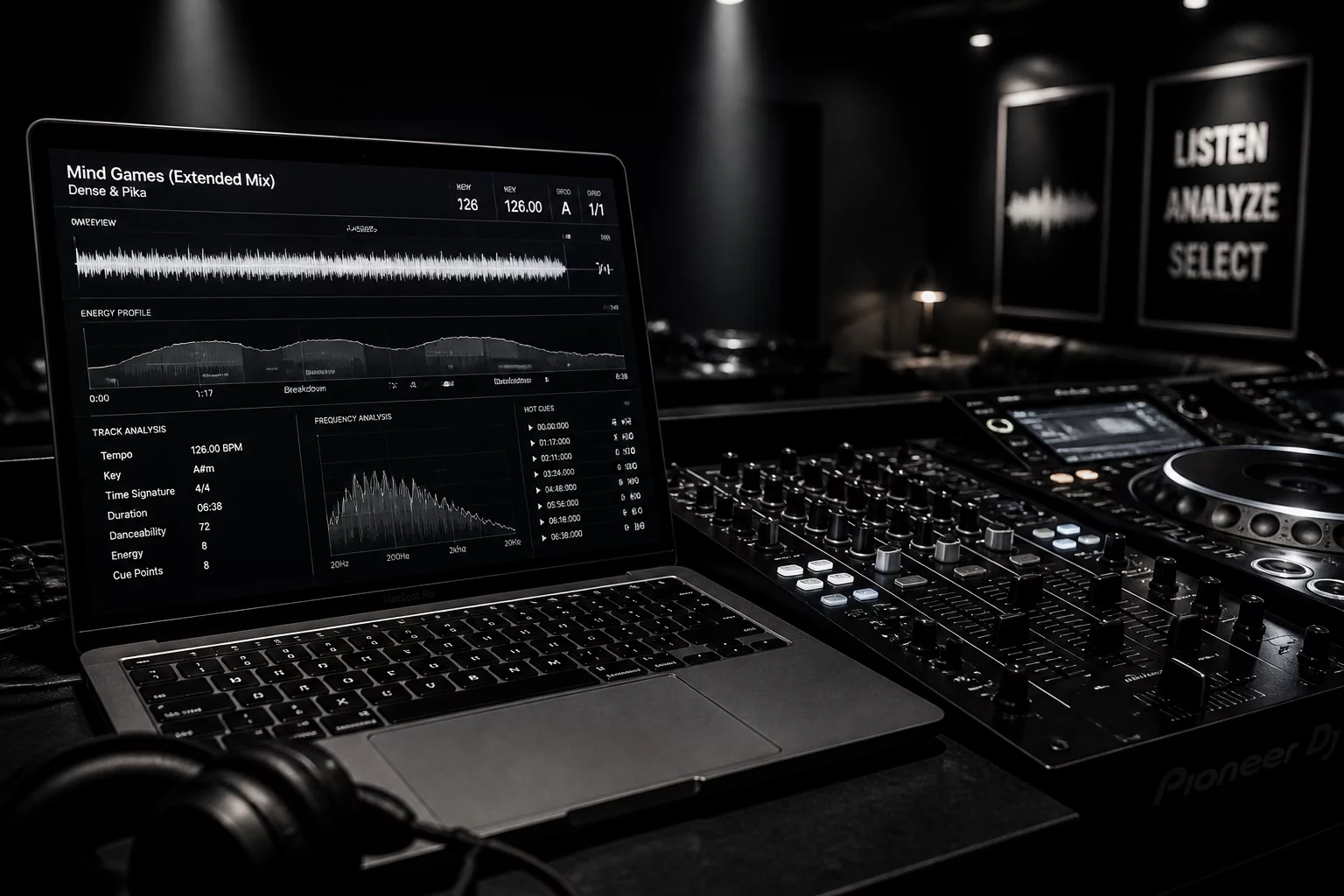
Exporting unedited session logs directly via Serato History to recover exact playback timestamps, cue times, and total duration per selection without relying on memory.
Conducting a meticulous played set review by charting chronological progressions, sudden tempo cuts, unexpected detours, and harmonic modulations.
Isolating the evening's strongest segment against stalled transitions, documenting why the mid-set reset restored momentum across the floor.
Distilling the central lesson: what did the played session reveal that the planned set did not? Converting live findings into future crate refinements.
Isolate the exact friction point between your prepared crate and the live played reality to extract reproducible booth rules.
You pre-arranged a deliberate warm-up curve at home, but walked into a room already vibrating with higher sonic density. Sticking dogmatically to your intended opening tracks dissipated the dancefloor before your main arc even started.
Learn to log the exact transition point where you abandoned the prepared opener, analyzing what ambient cue triggered the detour and preserving the pivot for future early slots.
The DJ intended to open with atmospheric downbeat textures. Two tracks in, the room required immediate rhythmic grounding. History data revealed Track 3 became the actual catalyst of the night.
“Reading crowds is pure live intuition; post-set cataloging won't change next week's unpredictable crowd.”
Live intuition is simply rapid subconscious pattern recognition. Journaling your session transforms blind luck into repeatable performance instincts.
Reacting instantly to nervous energy, you raised the tempo and released peak dynamic peaks in the first third of your slot. By hour two, you had nowhere higher to take the system without exhausting the floor.
Session history exports expose hidden tempo surges and key acceleration points, revealing whether intensity was earned musically or forced mechanically through tempo sliders.
The selector pushed tempo abruptly after feeling an initial lull. History review showed the crowd thinned out 40 minutes later due to auditory fatigue. A deliberate 128 BPM mid-set reset restored dancefloor longevity.
“If the dancers are yelling for more speed, holding back energy kills the club atmosphere.”
Tension comes from rhythmic contrast, not continuous acceleration. Rebuilding momentum after an intentional dip creates deeper long-term impact than sustained peak pressure.
You spent days cueing and testing specific records for the night, loaded them into your prepare crate, yet hesitation kept you recycling safe comfort tracks while your strongest curated pieces stayed unplayed.
Confront the delta between your theoretical taste and live bravery. Quantify why specific tracks failed to clear the threshold and identify which transitional anchors were missing.
The selector feared disrupting four-to-the-floor stability. Post-set playback analysis showed the room was craving a rhythmic break. The missed cue became the center of the next gig's highlight segment.
“If I didn't feel it in the booth, the track simply wasn't right for that moment.”
Comfort-zone bias masquerades as venue instinct. Reviewing unplayed crates reveals whether taste caution or technical unpreparedness dictated your restraint.
You finish a 3-hour set, close your laptop, and wake up with only fuzzy memories of what actually worked. Valuable track sequencing, unexpected tempo detours, and crowd response markers vanish into unread log files.
Transform raw Serato session data into an actionable knowledge archive. Discover unintentional 3-track pairings that worked better than weeks of rehearsal.
A panic selection at 02:40 AM paired an obscure 90s acid bassline with an electro vocal. Reviewing the export turned an impromptu recovery into a signature resident routine.
“I do this for the music and spontaneous feeling, not to analyze exports like an accountant.”
Analysis does not kill spontaneity; it honors the unique ephemeral magic of your played session by making its deepest lessons permanent.
Explore how played Serato History exports transform into actionable tactical intelligence across four rigorous post-gig evaluation stages.
Executed at scheduled start time. Provided the baseline groove before room density demanded immediate tempo elevation earlier than programmed in the rehearsal crate.
Comparing pre-gig crate preparation against the authoritative Serato History export unveils where intuition departed from the script and how audience density altered track sequencing.
Ready to export and analyze your own DJ sessions directly from official Serato logs?
Open Serato History GuideClear parameters for every SetRecall session audit. We define analytical deliverables upfront to maintain objective DJ performance review standards.
Have specific crate structures or an exported Serato history session you want us to audit before your next booking?
Inquire About A Session AuditSetRecall Journal operates as an independent educational publication. We dissect performance trajectories, temporal shifts, and track deviations utilizing export data from leading DJ platforms, audio logs, and post-session journals.
The official History panel records played audio tracks per session, logs start stamps, and facilitates clean data exports for post-performance analysis.
Structured export tables parse chronological cue transitions, playtime lengths, and unexpected sequence interruptions across each stage phase.
Controller telemetry, rotary mixers, and audio interface capture routes help pinpoint where physical transitions altered intended energy curves.
Our editorial matrix links raw played timestamps to qualitative variables: room reactions, tempo drops, and preparation crates that remained unplayed.