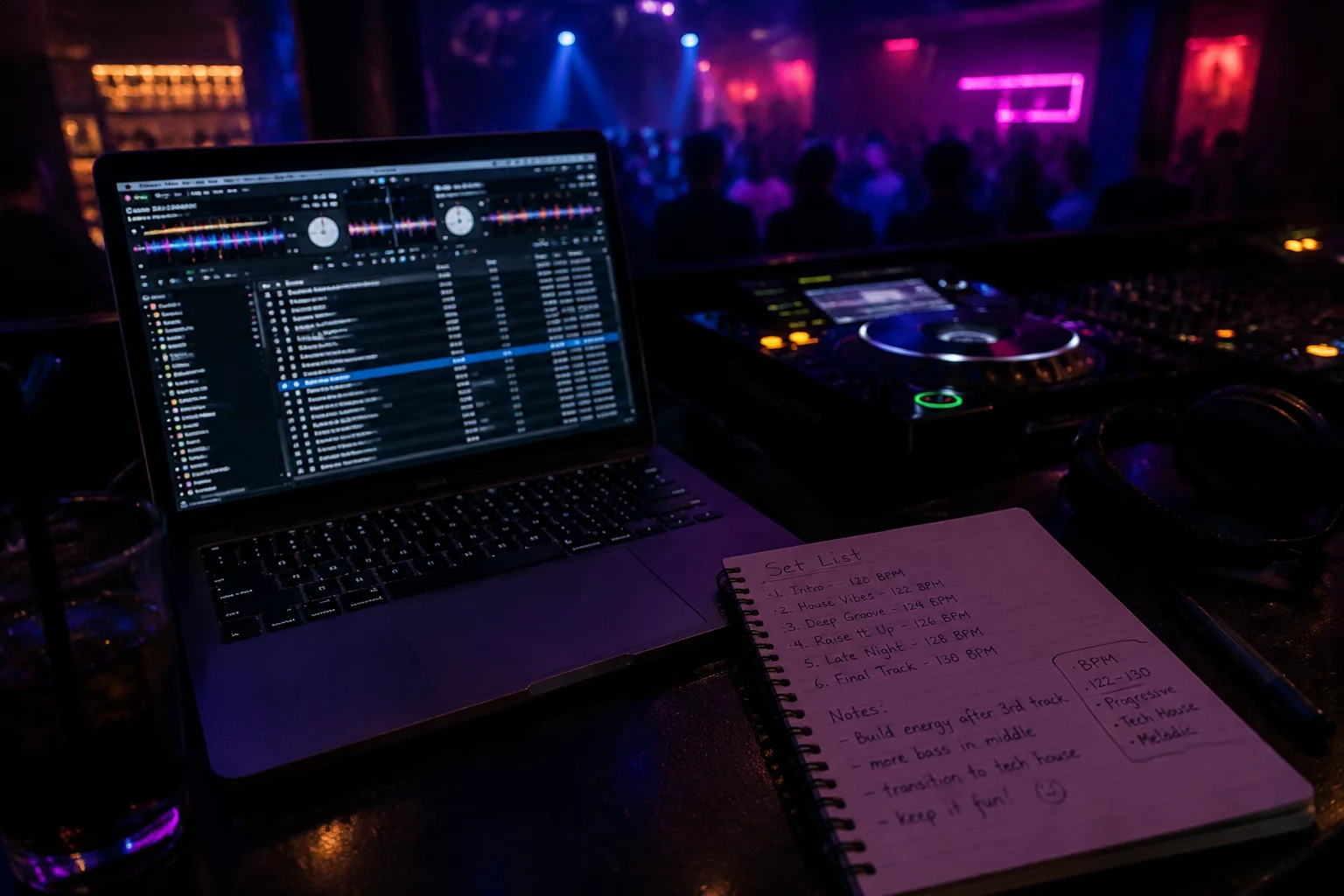
The Immediate Disconnect Between Studio Prep and Floor Reality
Two full hours spent polishing an atmospheric, slow-blooming melodic opener evaporated within thirty seconds of stepping into the booth. The preceding selector had driven the system harder than polite changeover convention generally permits, leaving dozens of dancers rooted directly between the speaker stacks. In that specific acoustic environment, dropping a delicate beatless pad sequence would have bled out the accumulated sub-bass tension immediately.
Standing beside the active mixer with headphones clamped over one ear, observing the kinetic weight of the space proved that the room possessed zero patience for an intellectual ramp-up. Dancers were leaning into heavy low-frequency pressure rather than seeking melodic resolution. Scrolling away from the meticulously prepared track on Deck 1 caused a brief jolt of discomfort, but sticking to an irrelevant prep list simply to validate afternoon crate sorting would have cleared half the floor before the initial phrase completed.
Dissecting the Split-Second Override on Deck 1
The original opener relied on an extended ninety-second build with gentle keys designed to establish an introspective mood from scratch. That choice made sense in an empty room, yet the club already had body heat, low conversation murmurs, and rhythmic momentum. Dropping that cut into the handoff would have forced people to stop moving entirely and wait out the silence. Instead, the rotary dial skipped three sub-crates downward, landing squarely on a dry, percussive 118 BPM track with continuous low-end drive.
The Prepared Tracklist Fallacy
A planned opener represents a hypothetical room that rarely exists once the booth fader opens. Treating track one as an immutable mandate ignores the live acoustic resonance and psychological posture of the dancers already occupying the space.
By lowering the tempo down to 118 BPM while preserving thick, stripped-back kick patterns, the handover captured attention without jarring ears. The room did not evacuate; bodies shifted weight, dancers settled into a deeper pocket, and the sudden sonic space granted the booth room to breathe. Serato session history later revealed that this spontaneous replacement initiated a completely different narrative arc that never returned to the planned folder.
How Scrapping the First Track Rebuilt the Entire Trajectory
Discarding the blueprint on bar one triggered a chain reaction throughout the entire performance. Once the safety blanket of a rehearsed progression vanished, every upcoming cue selection required direct, real-time evaluation of dancer responses. Instead of glancing ahead at a pre-sorted column, the performance turned into genuine crate excavation guided by three decisive set principles:
-
Decoupling Velocity from Impact: Slowing the tempo by four BPM demonstrated that heavy groove and swing generate substantially more room presence than raw speed without proper low-end fullness.
-
Active Archive Navigation: Abandoning the primary crate prompted deep dives into older archival playlists, pulling forgotten rhythm tracks that fit the immediate venue acoustics far better than recent promos.
-
Phrasing by Crowd Response: Mix points were chosen based on floor posture and shoulder movement rather than rigid sixteen-bar cues tagged into software months prior.