The Structural Collision Between Pre-Selected Crates and Live Room Kinetics
Every seasoned selector knows the feeling of walking into a venue with a pristine crate sequence, only to discover within minutes that the kinetic energy in the room demands an entirely different frequency. During DJ Solo's mid-August session, forty-two meticulously key-matched and BPM-graded tracks sat primed in the Serato prepare panel. By the conclusion of the two-hour window, nearly half of those planned transitions had dissolved in favor of reactive, crowd-responsive detours.
The First Friction Point: Sub-Bass Saturation and Crowd Dispersion
Solo had mapped an initial four-track ramp beginning at 124 BPM, anticipating a lingering warm-up crowd eager for rolling progressive textures. Instead, the room arrived early, dense, and physically restless. The first planned cut, an atmospheric deep roller with an extended eighty-bar breakdown, failed to capture the kinetic tension of the floor. The dancers near the front monitors shifted weight restlessly, and the perimeter began drifting toward the bar.
Recognizing the disconnect before the first breakdown drained the room, Solo bypassed tracks two and three entirely. Rather than relying on harmonic key matches from the prepare folder, he punched directly into a raw, percussion-driven tribal tool sitting ten BPM higher than scheduled. The sudden rhythmic injection immediately pinned the room back onto the central floor, proving once again that tonal perfection on paper means nothing when kinetic momentum is hemorrhaging in the booth.
A pre-arranged crate is a hypothesis, not a contract. When the room talks back through its movement, honoring your preparation over their reaction is the fastest way to lose the floor.DJ Solo — Post-Session Debrief Log, August 2026
Tactical Pivot: Unearthing Hidden Gems in the Unsorted Bin
The live Serato session history demonstrates a stark fork in the sequencing at the forty-five-minute mark. With the crowd locked into a rugged, driving groove, the planned pivot into vocal-heavy melodic cuts would have severed the hypnotic cadence. Solo abandoned the prepare crate altogether, dipping instead into archived quick-search folders and uncataloged promo edits. The resulting ninety-minute run maintained a continuous, relentless pulse that no studio pre-planning could have manufactured.
- Breakdown Management: Skipping long ambient valleys when crowd density requires uninterrupted low-end momentum.
- BPM Elasticity: Willingness to jump tempo brackets by more than 4 BPM when the ambient room temperature runs ahead of schedule.
- Prepare Hygiene: Treating the prepare window as an emergency toolkit rather than a linear tracklist to preserve spontaneous agility.
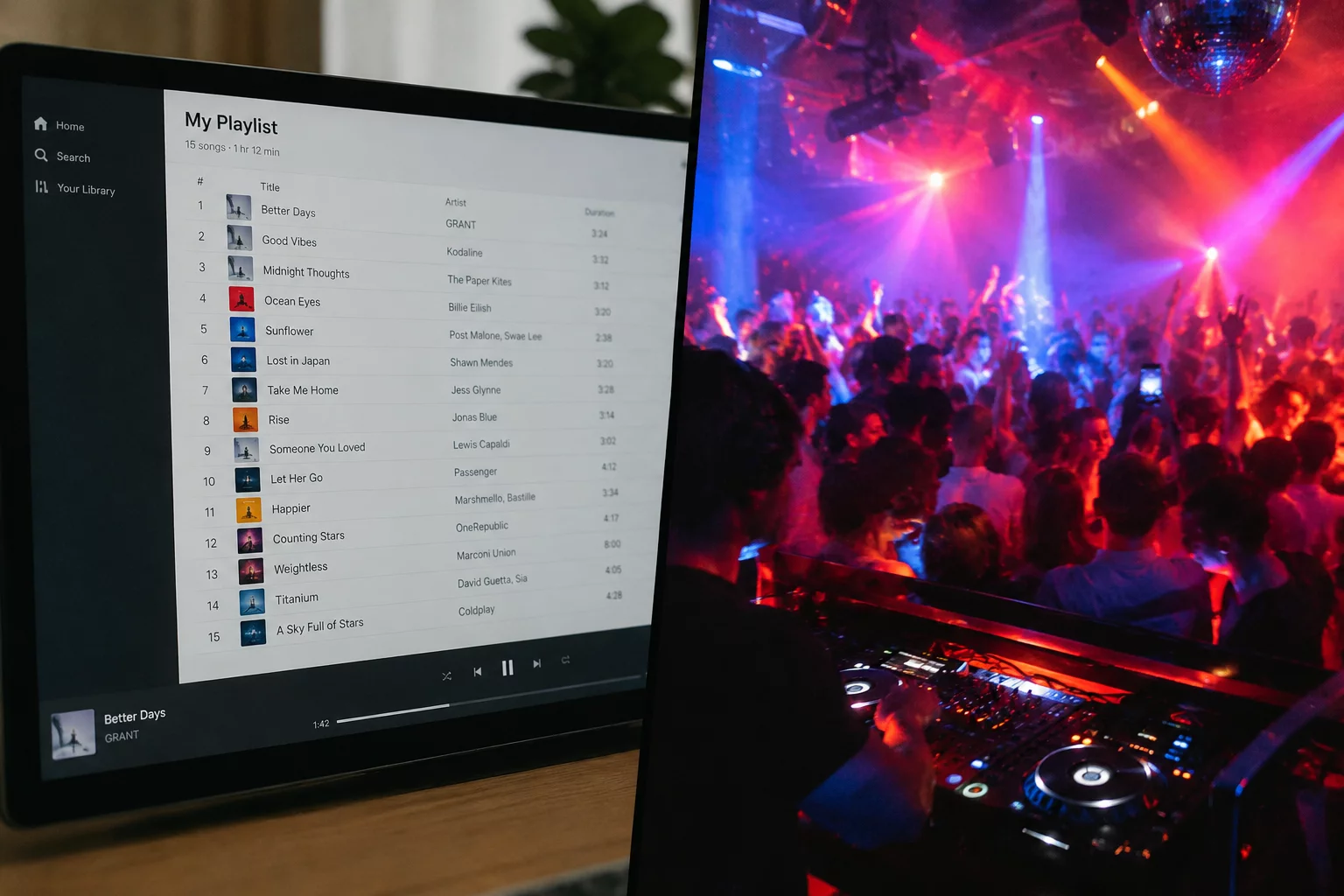
Serato session capture showing the visual contrast between the orderly pre-set crate and the fractured live performance log.
Session Technical Metrics
| Session Slot | 01:00 AM – 03:00 AM (Peak Headline) |
|---|---|
| BPM Range | 124.0 – 132.5 BPM (Planned: 124 – 128 BPM) |
| Primary Gear | Pioneer DJM-900NXS2 + 2x CDJ-3000 |
| Software Build | Serato DJ Pro 3.2.1 |
| Key Variance | 6 Semi-Tone Energy Jumps Logged |
Related Planned vs Played Reports
DJ Solo
Expectation Meets Reality in the Club
An investigative recap of how an orderly digital playlist collided with unexpected peak-hour room kinetics.
Read Report Mia T
When the Crowd Rejects the Plan
Analysis of an abrupt shift when an expectant dancefloor rejected melodic cuts, forcing an emergency switch to percussive techno.
Read Report Leon K
Adapting to the Warm-Up Vibe
A study in pacing restraint, documenting how an opener navigated early empty space by delaying planned uptempo selections.
Read Report Sam V
The Peak Time Surprise
A technical report on an unplanned 134 BPM escalation triggered by an electric reaction to a mid-set transition.
Read Report